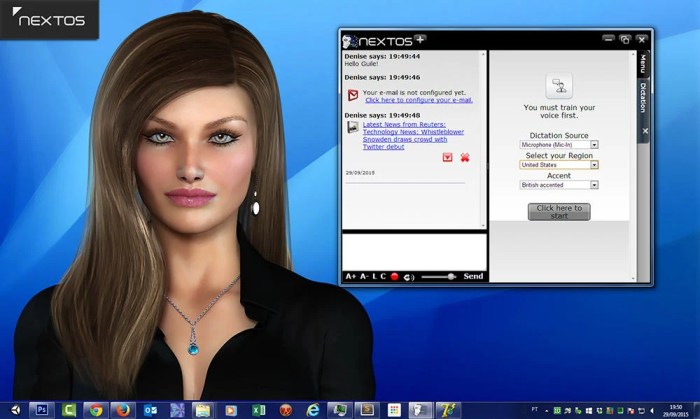
Virtual assistant software is rapidly transforming how businesses operate, offering unprecedented levels of automation and efficiency. From scheduling appointments and managing emails to analyzing data and providing customer support, these intelligent tools are streamlining workflows and boosting productivity across various industries. This exploration delves into the core functionalities, benefits, technical aspects, user experience, and future potential of this transformative technology, providing a comprehensive understanding of its impact on the modern workplace.
We’ll examine different types of virtual assistant software, comparing cloud-based and desktop solutions, and highlighting key features that differentiate leading products. We’ll also discuss the underlying technologies, including artificial intelligence and machine learning, and explore the crucial aspect of user interface design for optimal user experience. Finally, we’ll consider the ethical implications and future challenges associated with the widespread adoption of increasingly sophisticated virtual assistant software.
Defining Virtual Assistant Software
Virtual assistant software encompasses a range of applications designed to automate tasks and enhance productivity. These tools leverage artificial intelligence (AI) and machine learning (ML) to understand and respond to user requests, effectively acting as a digital assistant capable of performing various functions. This software significantly streamlines workflows, allowing individuals and businesses to focus on higher-level tasks.Virtual assistant software offers a diverse set of core functionalities.
These include natural language processing (NLP) for understanding human language, task management capabilities for scheduling and prioritizing activities, calendar integration for managing appointments, email management for sorting and responding to messages, and data retrieval for accessing and processing information from various sources. Advanced features may also include integration with other software applications, voice recognition, and personalized learning to adapt to individual user preferences.
Examples of Automated Tasks
Virtual assistant software can automate a wide array of tasks, significantly reducing manual effort. For example, scheduling meetings across multiple time zones, composing emails based on pre-defined templates, generating reports from data sets, conducting online research, managing social media accounts, and setting reminders are all readily automated. Businesses might use this software to streamline customer service interactions through automated responses to frequently asked questions, or to manage inventory levels and order fulfillment.
Individuals can use it for personal tasks like managing to-do lists, setting reminders for appointments, or controlling smart home devices.
Types of Virtual Assistant Software
Two primary types of virtual assistant software exist: cloud-based and desktop-based. Cloud-based virtual assistants store data and processing power on remote servers, accessible from any device with an internet connection. This offers flexibility and accessibility but requires a stable internet connection. Desktop-based virtual assistants, on the other hand, are installed directly on a user’s computer, offering offline functionality but limiting accessibility to that specific machine.
The choice between these types depends on individual needs and preferences regarding data security, accessibility, and offline functionality. For example, a sales team requiring constant access to client information might prefer a cloud-based solution for accessibility, whereas a financial analyst handling sensitive data might opt for a desktop-based solution for enhanced security.
Key Differentiating Features of Leading Virtual Assistant Software
Leading virtual assistant software products often differentiate themselves through features like advanced NLP capabilities, allowing for more nuanced and accurate understanding of user requests. Some offer more robust integration with other applications, enabling seamless workflow automation. Others may focus on specific industry needs, providing tailored features for particular sectors like healthcare or finance. For instance, one product might excel in scheduling and calendar management, while another might prioritize advanced data analysis and reporting capabilities.
The level of customization and personalization also varies significantly, with some offering extensive options for tailoring the assistant’s behavior and functionality to individual preferences. Consideration of these differentiating features is crucial in selecting a virtual assistant software that best aligns with specific needs and requirements.
Benefits and Applications of Virtual Assistant Software
Virtual assistant software offers a transformative approach to productivity and efficiency, impacting various aspects of business operations and personal life. By automating repetitive tasks and providing readily available information, these tools significantly improve workflow and free up valuable time for more strategic endeavors. This section will explore the key advantages and diverse applications of this increasingly prevalent technology.
Productivity Gains Through Virtual Assistant Software
Implementing virtual assistant software leads to substantial productivity gains. These tools automate routine tasks such as scheduling appointments, managing emails, setting reminders, and even drafting basic documents. This automation frees up human employees to focus on higher-level tasks requiring critical thinking, creativity, and strategic decision-making. For example, a marketing team using a virtual assistant to manage social media scheduling can dedicate more time to developing creative campaigns and analyzing marketing data.
The resulting increase in efficiency translates to faster project completion times and improved overall output. The time saved can be repurposed for more valuable activities, leading to a noticeable boost in productivity across the board.
Cost-Effectiveness of Virtual Assistant Software Compared to Human Assistants
Virtual assistant software offers significant cost advantages compared to employing human assistants. The initial investment in the software is often a one-time expense or a recurring subscription fee, which is typically far less than the ongoing costs associated with hiring, training, and managing a human employee. This includes salaries, benefits, office space, and equipment. Furthermore, virtual assistants operate 24/7, providing continuous support without the need for overtime pay or breaks.
While human assistants are invaluable for complex tasks requiring emotional intelligence and nuanced judgment, virtual assistants excel at handling routine, repetitive tasks, thus making them a cost-effective solution for businesses of all sizes.
Industries Benefiting Most from Virtual Assistant Software
Virtual assistant software finds widespread application across numerous industries, but its benefits are particularly pronounced in sectors heavily reliant on communication, scheduling, and data management. Customer service departments leverage virtual assistants to handle initial inquiries, provide basic support, and route complex issues to human agents. This improves response times and customer satisfaction. The healthcare industry utilizes virtual assistants for appointment scheduling, medication reminders, and patient communication.
Similarly, the education sector uses them for administrative tasks, student support, and automated grading. In the real estate industry, virtual assistants can manage property listings, schedule showings, and communicate with potential buyers and sellers. The adaptability of virtual assistant software allows for seamless integration into diverse workflows.
Hypothetical Scenario: Positive Impact on a Small Business
Consider a small bakery struggling to manage online orders, social media engagement, and customer inquiries simultaneously. Implementing a virtual assistant could automate order processing, send automated order confirmations and updates, and manage social media posting schedules. The bakery owner, previously overwhelmed with administrative tasks, could now focus on baking, interacting with customers, and developing new product lines. This increased efficiency would lead to improved customer service, streamlined operations, and ultimately, increased profitability.
The virtual assistant frees up the owner’s time, allowing them to concentrate on the core aspects of their business, leading to increased revenue and a more sustainable business model.
Technical Aspects of Virtual Assistant Software
Virtual assistant software relies on a sophisticated interplay of technologies to understand, respond to, and learn from user interactions. This section delves into the core technologies, security considerations, and practical integrations that define the capabilities of these increasingly prevalent tools.
The functionality of virtual assistants is underpinned by several key technologies, working in concert to provide a seamless user experience. These technologies are constantly evolving, leading to more sophisticated and intuitive assistants.
Underlying Technologies
Natural Language Processing (NLP) and Natural Language Understanding (NLU) are crucial components. NLP enables the virtual assistant to process human language, breaking it down into its constituent parts to understand the intent and context. NLU takes this a step further, interpreting the meaning and sentiment behind the words, allowing for more nuanced responses. Machine learning (ML), specifically deep learning, plays a vital role in enabling the system to learn from past interactions and improve its accuracy and performance over time.
This continuous learning allows for personalized experiences and increasingly accurate responses. The underlying architecture often involves cloud computing for scalability and efficient processing of large datasets.
Security Considerations and Mitigation Strategies
Security is paramount when dealing with virtual assistant software, especially those handling sensitive personal or business information. Data breaches, unauthorized access, and privacy violations are significant concerns. Mitigation strategies include robust encryption of data both in transit and at rest, secure authentication mechanisms (like multi-factor authentication), regular security audits and penetration testing, and adherence to relevant data privacy regulations (such as GDPR or CCPA).
Furthermore, employing principle of least privilege, where the system only has access to the data absolutely necessary for its operation, is crucial. Regular software updates are also essential to patch vulnerabilities and improve security.
Comparison of Popular Virtual Assistant Software
The following table compares several popular virtual assistant software packages based on their technical specifications. Note that specifications can change rapidly, so it’s recommended to check the vendor’s website for the most up-to-date information.
| Virtual Assistant | Platform Compatibility | Integration Capabilities | AI/ML Capabilities |
|---|---|---|---|
| Amazon Alexa | iOS, Android, Web, Smart Devices | Numerous Smart Home devices, various third-party apps | Advanced NLP, Speech Recognition, Machine Learning for personalization |
| Google Assistant | Android, iOS, Web, Smart Devices | Extensive integration with Google services, various third-party apps | Sophisticated NLP, Deep Learning for contextual understanding |
| Apple Siri | iOS, macOS, watchOS, tvOS | Tight integration with Apple ecosystem, limited third-party app integration | NLP, Speech Recognition, Machine Learning for personalized suggestions |
| Microsoft Cortana | Windows, iOS, Android | Integration with Microsoft Office suite and other Microsoft services | NLP, Speech Recognition, Machine Learning for task management and scheduling |
Integration with Business Applications
Virtual assistants seamlessly integrate with a variety of business applications, enhancing productivity and streamlining workflows. For example, integration with Customer Relationship Management (CRM) systems allows for automated task creation, lead assignment, and customer interaction logging. Integration with email clients enables automated email responses, scheduling, and prioritization. Integration with project management tools can automate task assignment, progress tracking, and reporting.
These integrations significantly reduce manual effort, improve efficiency, and provide valuable insights from aggregated data. For instance, a virtual assistant integrated with a CRM can automatically update customer records after a sales call, saving valuable time for sales representatives.
User Experience and Interface Design of Virtual Assistant Software
The user experience (UX) and interface design (UI) are paramount to the success of any virtual assistant software. A poorly designed interface can lead to frustration and ultimately, abandonment of the software, even if the underlying technology is powerful. Conversely, a well-designed interface can make even complex tasks feel intuitive and enjoyable. This section will explore the key aspects of designing a user-friendly and effective virtual assistant.
User Persona and Needs
A typical virtual assistant user, let’s call her Sarah, is a busy professional juggling multiple responsibilities. Sarah needs a virtual assistant that is efficient, reliable, and easily integrates into her existing workflow. She values speed and accuracy above all else, and appreciates a clean, uncluttered interface that allows her to quickly access the information and functionality she needs.
Sarah is tech-savvy but doesn’t want to spend hours learning a complex system; she needs a tool that is intuitive and requires minimal training. Her needs include scheduling appointments, managing emails, setting reminders, conducting quick searches, and accessing relevant information quickly and efficiently. She also values features that personalize her experience, such as the ability to customize settings and preferences.
Importance of Intuitive User Interface Design
Intuitive user interface design is crucial for virtual assistant software because it directly impacts user satisfaction and adoption. A poorly designed interface can lead to user frustration, errors, and ultimately, the abandonment of the software. An intuitive interface, on the other hand, minimizes the learning curve, allowing users to quickly and easily accomplish their tasks. This leads to increased user engagement, higher productivity, and a more positive overall experience.
A well-designed interface anticipates user needs and provides clear, concise guidance, making the interaction with the software seamless and efficient. This is particularly important for virtual assistants, as users often interact with them under time pressure and require quick access to information and functionalities.
Examples of Effective and Ineffective User Interface Elements
Effective user interface elements include clear and concise visual cues, such as icons and labels that accurately represent the functions they control. A clean, uncluttered layout that prioritizes essential functions, coupled with intuitive navigation and search capabilities, are also vital. For example, a well-designed calendar integration should allow users to easily view and manage appointments with minimal clicks.
Ineffective elements include cluttered interfaces with too many options, unclear labels, and inconsistent design patterns. For example, a virtual assistant with inconsistent iconography or a confusing navigation structure will frustrate users and hinder productivity. A search function that returns irrelevant results or fails to provide clear search suggestions is another example of a poorly designed element. Furthermore, poor error handling and lack of clear feedback mechanisms contribute to a negative user experience.
Optimal User Experience Flow for Common Tasks
The optimal user experience flow for common tasks, such as setting reminders or scheduling appointments, should be straightforward and require minimal steps. For instance, setting a reminder should involve a simple process of specifying the time, date, and details of the reminder, with clear confirmation of the action. Scheduling appointments should similarly involve easy access to calendars, contact information, and the ability to add details such as location and description.
The system should provide clear feedback at each step of the process, confirming actions and providing error messages when necessary. A well-designed virtual assistant anticipates user needs and provides shortcuts and suggestions to expedite common tasks. For example, the system could proactively suggest relevant contacts or calendar entries based on the user’s current activity or input.
The Future of Virtual Assistant Software
Virtual assistant software is rapidly evolving, driven by advancements in artificial intelligence, machine learning, and natural language processing. We can expect increasingly sophisticated and integrated virtual assistants to become integral parts of our daily lives, impacting various aspects of work, leisure, and personal management. This section explores predictions for the future development of this technology, examining potential new applications, ethical considerations, and challenges to widespread adoption.
Predicted Capabilities and Development
The future of virtual assistant software points towards a significant increase in contextual awareness and personalized experiences. We can anticipate virtual assistants that understand nuanced language, interpret emotions, and proactively anticipate user needs. For example, instead of simply responding to a query about the weather, a future virtual assistant might automatically adjust a smart home’s thermostat based on the predicted temperature and user preferences.
Further development will likely focus on improved multi-modal interaction, incorporating gestures, facial expressions, and other sensory inputs to create a more natural and intuitive user experience. Imagine interacting with your virtual assistant through a combination of voice commands, visual cues, and even haptic feedback, leading to a truly seamless interaction. This advancement would require significant breakthroughs in AI and sensor technology, but the potential for a richer, more immersive experience is substantial.
New Applications in Emerging Technologies
Virtual assistants are poised to play a crucial role in the growth of several emerging technologies. In the realm of the metaverse and augmented reality, virtual assistants could act as personalized guides, providing real-time information and assistance within immersive environments. Imagine a virtual assistant seamlessly integrating with your AR glasses, providing directions, translating languages in real-time, or offering interactive product information while shopping in a virtual store.
Similarly, in the Internet of Things (IoT) ecosystem, virtual assistants will serve as central hubs, managing and coordinating a vast network of connected devices within a smart home or office. They could optimize energy consumption, enhance security, and provide predictive maintenance for various appliances. The integration of virtual assistants into healthcare is also promising. They could provide medication reminders, monitor vital signs, and even offer basic telehealth consultations, making healthcare more accessible and personalized.
Ethical Implications of Advanced Virtual Assistants
The increasing sophistication of virtual assistants raises significant ethical concerns. Issues of data privacy and security become paramount as these assistants collect vast amounts of personal information. Concerns about algorithmic bias and potential discrimination need careful consideration, ensuring fairness and equity in the design and deployment of these systems. Furthermore, the potential for misuse of virtual assistants for malicious purposes, such as creating deepfakes or spreading misinformation, necessitates robust security measures and ethical guidelines.
The development of responsible AI principles is crucial to mitigate these risks and ensure that virtual assistants are used ethically and beneficially. Transparency in data usage and algorithmic decision-making is vital to building trust and fostering responsible innovation.
Challenges to Widespread Adoption
Despite their potential, several challenges could hinder the widespread adoption of virtual assistant software. Interoperability between different virtual assistant platforms remains a significant obstacle. Users often find themselves locked into specific ecosystems, limiting the flexibility and convenience of using various services. Addressing this issue requires collaborative efforts to establish common standards and protocols. Furthermore, concerns about the cost and complexity of implementing and maintaining virtual assistant systems could limit their accessibility, particularly for smaller businesses and individuals.
The need for reliable and robust internet connectivity is another critical factor, as virtual assistants rely heavily on cloud-based services. Addressing the digital divide and ensuring equitable access to high-speed internet is crucial for maximizing the benefits of virtual assistant technology.
Virtual Assistant (General Overview)
Virtual assistants, both human and software-based, are rapidly transforming how we work and live. They offer a range of support, from scheduling appointments to managing complex projects, increasing efficiency and productivity across various sectors. This section explores the distinctions between these two types of assistants, their capabilities, and their evolving roles.The fundamental difference lies in the nature of their intelligence and capabilities.
Human virtual assistants possess a broader range of skills, including critical thinking, complex problem-solving, and nuanced communication. Software virtual assistants, conversely, excel at repetitive tasks, data processing, and following pre-programmed instructions with high speed and accuracy. While both types aim to streamline workflows, their approaches and limitations differ significantly.
Human Virtual Assistants versus Software-Based Virtual Assistants
Human virtual assistants bring a level of adaptability and emotional intelligence that software currently lacks. They can handle unpredictable situations, understand context, and offer personalized support based on individual needs. Software virtual assistants, however, can process vast amounts of data quickly and accurately, performing tasks like scheduling, email management, and data entry far more efficiently than a human. For example, a human assistant might expertly negotiate a complex contract, while a software assistant could effortlessly schedule hundreds of appointments across multiple time zones.
The optimal choice depends on the specific task and required skillset.
Typical Tasks Handled by Virtual Assistants
A wide variety of tasks are handled by virtual assistants, depending on whether they are human or software-based. Human virtual assistants often manage calendars, travel arrangements, communication, research, and administrative tasks. They might also handle more complex duties like project management, client communication, or social media management. Software virtual assistants, on the other hand, typically focus on automating repetitive tasks such as email filtering, data entry, appointment scheduling, and basic customer service interactions.
For instance, a software assistant might automatically respond to frequently asked questions, while a human assistant might engage in a more in-depth discussion with a client.
Evolving Roles and Responsibilities of Virtual Assistants in the Modern Workplace
The roles of virtual assistants are constantly evolving. As technology advances, software assistants are taking on increasingly complex tasks, allowing human assistants to focus on more strategic and creative endeavors. For example, software can now handle complex data analysis, leaving human assistants free to interpret the results and make informed decisions. This collaboration between human and software assistants is becoming increasingly common, with each complementing the other’s strengths to create a highly efficient and effective workflow.
The future will likely see even greater integration, with virtual assistants playing an even more central role in the modern workplace.
Virtual assistant software represents a significant advancement in workplace technology, offering substantial benefits in terms of efficiency, cost-effectiveness, and overall productivity. While challenges remain regarding security, ethical considerations, and widespread adoption, the future of virtual assistant software is undeniably bright, with potential applications expanding into emerging technologies and further revolutionizing how we work. Understanding its capabilities and limitations is crucial for businesses seeking to leverage its power for growth and innovation.
Helpful Answers
What is the difference between a virtual assistant and virtual assistant software?
A virtual assistant is a person who provides administrative, technical, or creative assistance remotely. Virtual assistant software is a computer program that automates tasks typically handled by a human virtual assistant.
Is virtual assistant software secure?
Security depends on the specific software and its implementation. Choosing reputable providers with robust security measures, such as encryption and access controls, is crucial. Regular software updates are also essential to mitigate vulnerabilities.
How much does virtual assistant software cost?
Pricing varies greatly depending on features, provider, and subscription type. Some offer free plans with limited functionality, while others charge monthly or annual fees based on usage or features.
Can virtual assistant software integrate with existing business applications?
Many virtual assistant software solutions offer integrations with popular business applications like CRM systems, email clients, and calendar platforms, enabling seamless data flow and enhanced workflow efficiency.


