The rise of remote work has propelled virtual assistant jobs to the forefront of the modern employment landscape. This dynamic field offers a flexible and increasingly in-demand career path for individuals with diverse skill sets. From administrative support to specialized technical assistance, virtual assistants play a crucial role in boosting the productivity and efficiency of businesses worldwide. This guide delves into the multifaceted world of virtual assistant roles, exploring job market trends, compensation packages, and strategies for securing these sought-after positions.
We will examine the various types of virtual assistants, the skills needed to thrive in this competitive market, and the future prospects of this ever-evolving profession. Whether you’re considering a career transition or seeking to enhance your entrepreneurial endeavors, understanding the intricacies of the virtual assistant industry is key to success. This comprehensive overview provides valuable insights into navigating this exciting and rewarding career path.
Defining the Virtual Assistant Role
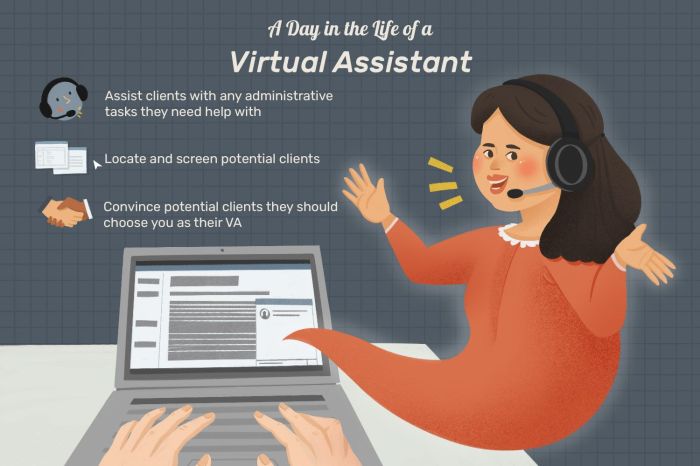
Virtual assistants (VAs) are independent contractors who provide administrative, technical, or creative assistance to clients remotely. They offer a flexible and cost-effective solution for businesses and individuals needing support across a wide range of tasks. This role has seen significant growth, driven by technological advancements and the increasing demand for remote work capabilities.The diverse nature of virtual assistant work means that no two days are ever quite the same.
VAs can handle anything from scheduling appointments and managing emails to conducting market research and creating social media content. The specific tasks undertaken depend heavily on the client’s needs and the VA’s skillset.
Virtual Assistant Skills and Qualifications
Employers typically seek VAs with a strong combination of technical and soft skills. Essential technical skills include proficiency in various software applications (e.g., Microsoft Office Suite, Google Workspace, project management tools), excellent communication (written and verbal), and organizational abilities. Soft skills, such as time management, problem-solving, and the ability to work independently, are equally crucial for success in this role.
Many employers also value experience in specific industries or niches, such as marketing, customer service, or social media management. Formal qualifications are not always mandatory, but relevant certifications or experience can be highly advantageous.
Virtual Assistant Roles Across Industries
The responsibilities of a virtual assistant vary significantly depending on the industry they serve. In the tech industry, VAs might manage social media accounts, schedule webinars, or provide technical support. Healthcare VAs may assist with appointment scheduling, patient communication, or medical billing. Marketing VAs frequently handle social media marketing, email marketing, content creation, and optimization. Each industry demands a specialized skill set, necessitating adaptation and continuous learning from VAs.
Common Virtual Assistant Responsibilities
The following table Artikels a hierarchical structure of common virtual assistant responsibilities, categorizing tasks, required skills, and typical tools used:
| Task Category | Specific Task | Required Skill | Typical Tools Used |
|---|---|---|---|
| Administrative Support | Scheduling appointments | Organization, Time Management | Google Calendar, Outlook Calendar |
| Administrative Support | Managing emails and correspondence | Communication, Email Etiquette | Gmail, Outlook, Email Marketing Platforms |
| Technical Support | Website maintenance | Technical Proficiency (e.g., HTML, CSS) | Website CMS (e.g., WordPress), FTP Clients |
| Marketing Support | Social media management | Social Media Marketing Knowledge | Hootsuite, Buffer, Social Media Analytics Tools |
| Research and Data Entry | Market research | Research Skills, Data Analysis | Spreadsheets (e.g., Excel, Google Sheets), Online Research Tools |
| Customer Service | Responding to customer inquiries | Excellent Communication, Problem-Solving | CRM Software, Email, Live Chat |
| Financial Support | Invoice processing | Financial Literacy, Accounting Software Proficiency | Accounting Software (e.g., QuickBooks, Xero) |
Job Market Analysis for Virtual Assistants
The virtual assistant (VA) industry is experiencing significant growth, driven by technological advancements and evolving business needs. This analysis explores the current state and future projections of the VA job market, examining global and regional demand, key hiring industries, and influential factors.The demand for virtual assistants is robust and expanding globally. While precise figures are difficult to pinpoint due to the freelance nature of much of the work, numerous reports and industry analyses point to a consistently high and growing need for VA services across various sectors.
This growth is fueled by both small businesses seeking cost-effective solutions and large corporations looking to outsource specific tasks.
Global and Regional Demand for Virtual Assistants
The global demand for virtual assistants is widespread, with significant concentrations in North America, Europe, and Australia. However, growth is also being observed in rapidly developing economies in Asia and South America, as businesses in these regions increasingly adopt remote work models and seek to leverage the cost-effectiveness and efficiency of virtual assistants. For instance, the increasing penetration of internet access and the rise of the gig economy in India and the Philippines have created substantial opportunities for VAs in these regions.
While specific numbers are hard to definitively quantify, anecdotal evidence and reports from freelance platforms indicate a consistently high volume of VA job postings and successful freelancer engagements across these regions.
Projected Growth of the Virtual Assistant Market
Market research firms project continued strong growth for the virtual assistant market in the coming years. While precise growth rates vary depending on the source and methodology, most forecasts suggest double-digit annual growth percentages for the foreseeable future. This optimistic outlook is supported by several factors, including the ongoing shift towards remote work, the increasing adoption of cloud-based technologies, and the growing need for businesses to optimize their operational efficiency.
For example, a report by [Insert credible market research firm name and report title if available] projected a [Insert percentage]% growth in the VA market between [Insert year] and [Insert year]. This growth is anticipated to be driven by factors such as [Mention specific drivers based on the report].
Top Industries Hiring Virtual Assistants
Several industries consistently demonstrate high demand for virtual assistant services. These include:
- Small and Medium-sized Businesses (SMBs): SMBs frequently rely on VAs to handle administrative tasks, marketing, customer service, and social media management, often lacking the resources for in-house staff.
- Technology Companies: Tech companies often hire VAs for scheduling, customer support, and technical writing.
- E-commerce Businesses: VAs play crucial roles in order processing, customer communication, and marketing for online retailers.
- Real Estate: VAs assist real estate agents with administrative tasks, client communication, and marketing efforts.
- Healthcare: The healthcare industry is increasingly using VAs for appointment scheduling, patient communication, and medical billing support.
Factors Influencing Demand for Virtual Assistant Services
Several key factors contribute to the increasing demand for virtual assistant services:
- Cost-effectiveness: Hiring a VA is often significantly more affordable than employing a full-time employee, especially for businesses with fluctuating workloads.
- Flexibility and Scalability: Businesses can easily adjust the number of VAs they employ based on their needs, allowing for scalability and flexibility.
- Access to Specialized Skills: VAs can provide businesses with access to a wide range of specialized skills and expertise without the need for extensive recruitment processes.
- Technological Advancements: Improved communication technologies and project management tools have made it easier and more efficient for businesses to work with VAs remotely.
- Globalization and Remote Work Trends: The increasing acceptance of remote work and the globalization of businesses have fueled the demand for VAs who can work across time zones and geographical boundaries.
Compensation and Benefits for Virtual Assistant Jobs
The financial rewards and benefits associated with virtual assistant roles are diverse, influenced significantly by experience, location, and the specific client or company. Understanding this compensation landscape is crucial for both aspiring and current virtual assistants to negotiate fair rates and appreciate the overall value proposition of this increasingly popular career path.
Average Salary Ranges for Virtual Assistants
Virtual assistant salaries vary considerably depending on several factors. Experience is a primary determinant; entry-level VAs typically earn less than those with several years of experience and a proven track record. Geographic location also plays a crucial role; higher costs of living in major metropolitan areas often correlate with higher pay rates. Specialization within the field also influences earnings; VAs with expertise in specific software, industries, or tasks (like social media management or graphic design) command higher fees.
For example, a junior VA in a rural area might earn $15-$25 per hour, while a senior VA specializing in marketing in a major city could command $50-$75 or more per hour. Independent contractors often set their own rates, while employed VAs typically receive a fixed salary.
Common Benefits Offered to Virtual Assistants
While traditional employee benefits like health insurance and paid time off are less common for independent contractor virtual assistants, some companies offering virtual assistant positions as employees do provide these. Other benefits, however, are more universally applicable. These can include flexible working hours, the ability to work remotely, and the potential for professional development opportunities. Clients may also offer bonuses based on performance or project completion.
The level of benefits offered is often directly correlated with the length of the working relationship and the complexity of the tasks involved.
Comparison with Traditional Office Settings
Compared to similar administrative or assistant roles in traditional office settings, virtual assistant compensation can be quite competitive, particularly for experienced professionals. While traditional roles might offer more structured benefits packages (like comprehensive health insurance and retirement plans), virtual assistants often enjoy greater flexibility and the potential to earn higher hourly rates, especially as they build their client base and expertise.
The trade-off lies in the stability and benefits package of a traditional job versus the autonomy and earning potential of freelance virtual assistant work.
Average Virtual Assistant Salaries by Country
| Country | Average Annual Salary | Currency | Experience Level |
|---|---|---|---|
| United States | $40,000 – $70,000 | USD | Entry-level to Senior |
| United Kingdom | £25,000 – £45,000 | GBP | Entry-level to Senior |
| Canada | $35,000 – $60,000 | CAD | Entry-level to Senior |
| Australia | $45,000 – $75,000 | AUD | Entry-level to Senior |
Finding and Securing Virtual Assistant Jobs
Landing a virtual assistant job requires a strategic approach combining effective job searching, compelling application materials, and confident interview skills. This section Artikels a step-by-step guide to help you navigate this process successfully.
Step-by-Step Guide to Finding Virtual Assistant Jobs
Securing a virtual assistant position involves a series of well-defined steps. Following this structured approach will significantly increase your chances of success.
- Self-Assessment and Skill Identification: Begin by identifying your strengths and weaknesses. What administrative, technical, or creative skills do you possess? What types of clients would you thrive working with? This self-reflection is crucial for targeting appropriate roles.
- Define Your Niche: Specializing in a specific area, such as social media management, email marketing, or scheduling, can make you a more attractive candidate. This allows you to focus your job search and tailor your resume and cover letter effectively.
- Create a Professional Online Presence: Develop a professional LinkedIn profile and consider creating a personal website showcasing your skills and experience. This establishes your credibility and allows potential clients to easily find you.
- Targeted Job Search: Utilize job boards like Indeed, Upwork, and Fiverr, searching specifically for “virtual assistant” roles. Also, explore company websites directly for remote opportunities.
- Network Strategically: Connect with professionals in your field on LinkedIn and other platforms. Engage in relevant online communities and attend virtual networking events.
- Prepare Compelling Application Materials: Craft a resume and cover letter highlighting your relevant skills and experience, showcasing your ability to meet the specific requirements of each job description.
- Master the Virtual Interview: Practice your responses to common interview questions, ensuring you can articulate your skills and experience clearly and confidently. Pay attention to your presentation and ensure a professional setting for the interview.
- Follow Up: After each interview, send a thank-you email reiterating your interest and highlighting key aspects of your conversation.
Effective Job Search Strategies for Virtual Assistants
Finding the right virtual assistant role necessitates a multi-pronged approach. Leveraging various platforms and networking strategies significantly improves your chances.
Online job boards such as Indeed, Upwork, and Fiverr offer a wide array of virtual assistant positions. These platforms allow you to filter by skills, location, and experience level. Directly applying on company websites often yields results as well, particularly for established businesses seeking long-term VAs.
Networking plays a crucial role. LinkedIn is an invaluable tool for connecting with potential clients and recruiters. Participating in relevant online forums and groups can expose you to hidden job opportunities and provide valuable insights into the industry. Attending virtual networking events allows for direct interaction with potential employers and industry professionals.
Crafting a Compelling Resume and Cover Letter
Your resume and cover letter are your first impression on potential employers. They must effectively showcase your skills and experience in a concise and compelling manner.
A strong resume should highlight relevant skills such as administrative tasks, customer service, social media management, email marketing, and any other specialized skills you possess. Quantify your accomplishments whenever possible, using metrics to demonstrate your impact in previous roles. For example, instead of saying “Managed social media accounts,” say “Increased social media engagement by 25% in six months.”
Your cover letter should be tailored to each specific job application. Address the employer’s needs directly, explaining how your skills and experience align with their requirements. Express your enthusiasm for the position and the company, and demonstrate your understanding of their industry and challenges. Conclude by reiterating your interest and requesting an interview.
Effectively Presenting Skills and Experience During a Virtual Interview
A successful virtual interview requires preparation and attention to detail. Your presentation and communication skills are paramount.
Before the interview, test your technology to ensure a smooth connection. Choose a quiet, well-lit space with a neutral background. Dress professionally, even though it’s a virtual interview. Prepare answers to common interview questions, focusing on how your skills and experience meet the specific requirements of the role. Practice answering questions aloud to improve your fluency and confidence.
During the interview, maintain eye contact with the camera, speak clearly and concisely, and actively listen to the interviewer. Demonstrate your enthusiasm and professionalism throughout the conversation. Ask thoughtful questions to show your genuine interest in the position and the company. After the interview, send a thank-you email expressing your gratitude and reiterating your interest in the role.
The Future of Virtual Assistant Work
The virtual assistant profession is experiencing rapid evolution, driven by technological advancements and shifting business needs. The future holds both exciting opportunities and significant challenges for virtual assistants who wish to thrive in this dynamic landscape. Adaptability and a proactive approach to skill development will be crucial for success.The integration of artificial intelligence (AI) and automation is significantly reshaping the virtual assistant landscape.
While some fear AI will replace human VAs, the reality is more nuanced. AI tools are increasingly automating repetitive tasks, freeing up virtual assistants to focus on higher-level, strategic work requiring human creativity, critical thinking, and emotional intelligence. This shift necessitates a focus on developing skills that complement, rather than compete with, AI capabilities.
Emerging Trends and Technologies
The increasing adoption of AI-powered tools, such as sophisticated scheduling software, automated email responses, and advanced transcription services, is transforming the daily tasks of virtual assistants. Cloud-based platforms are facilitating seamless collaboration and remote work, while the growth of the gig economy provides more flexible employment opportunities. Simultaneously, the rise of specialized virtual assistant niches, catering to specific industries or skill sets, is creating opportunities for deeper expertise and higher earning potential.
For example, some VAs are specializing in social media management for specific industries, leveraging AI tools for scheduling and analysis while providing human-driven creative content strategies. Others are focusing on highly technical tasks within specific software programs, demonstrating expertise that goes beyond basic administrative support.
Challenges and Opportunities
A major challenge for virtual assistants will be adapting to the changing technological landscape and acquiring new skills continuously. The competition is increasing, with both human and AI-powered assistants vying for client work. However, this also presents opportunities for specialization and differentiation. VAs who can master advanced technologies and offer highly specialized services will be in high demand.
Building a strong personal brand and networking effectively within their chosen niche will be crucial for attracting high-paying clients. Furthermore, navigating the complexities of the gig economy, including managing taxes, insurance, and self-promotion, will require strong entrepreneurial skills.
Essential Skills for Future Virtual Assistants
The ability to adapt and acquire new skills is paramount. Simply possessing foundational administrative skills will not suffice in the future. Virtual assistants must be able to leverage technology effectively, understand and implement advanced software, and demonstrate strong critical thinking and problem-solving abilities.
- Advanced Software Proficiency: Mastery of project management software (Asana, Trello), CRM systems (Salesforce, HubSpot), and various productivity tools (Google Workspace, Microsoft 365) is essential.
- AI Literacy and Integration: Understanding and utilizing AI-powered tools for tasks such as scheduling, email management, and data analysis will be crucial for efficiency.
- Data Analysis and Interpretation: The ability to extract meaningful insights from data and use this information to inform strategic decisions will be increasingly valuable.
- Digital Marketing and Social Media Management: Understanding social media strategies, , and content marketing will be essential for many virtual assistant roles.
- Strong Communication and Client Management Skills: The ability to communicate effectively, build rapport with clients, and manage expectations remains a cornerstone of success.
Understanding the “Virtual Assistant” Concept
The term “virtual assistant” (VA) encompasses a broad range of administrative, technical, and creative support services provided remotely. VAs leverage technology to assist clients, offering flexibility and scalability that traditional in-office assistants cannot always match. This section delves into the core functionalities, various specializations, and a typical workday for a virtual assistant, contrasting the role with traditional employment.The core functionalities of a virtual assistant revolve around providing administrative, technical, or creative support to clients.
This can include tasks such as scheduling appointments, managing emails, creating presentations, conducting online research, social media management, and even providing basic technical support. The key differentiator is the remote nature of the work, often utilizing various communication and collaboration tools.
Types of Virtual Assistants
Virtual assistants specialize in various areas, catering to diverse client needs. Administrative VAs handle scheduling, email management, travel arrangements, and other organizational tasks. Technical VAs offer support with website maintenance, data entry, software troubleshooting, and other technical skills. Social media VAs manage social media accounts, create content, and engage with audiences online. Other specializations include virtual executive assistants, who provide high-level support to executives, and virtual bookkeepers, who handle financial administration for businesses.
A Typical Day in the Life of a Virtual Assistant
A virtual assistant’s day is highly variable depending on their clients and specialization. However, a typical day might begin with checking emails and responding to urgent requests from clients. This could involve rescheduling meetings using a calendar application like Google Calendar, responding to client inquiries through email or instant messaging platforms like Slack or WhatsApp, or preparing a presentation using tools like PowerPoint or Google Slides.
Mid-morning might involve conducting online research using search engines and databases, preparing social media posts for a client using scheduling tools like Hootsuite or Buffer, or performing data entry tasks using spreadsheets. The afternoon could involve virtual meetings with clients via video conferencing tools such as Zoom or Skype, followed by follow-up tasks such as creating reports or updating client databases.
The day would conclude with reviewing completed tasks and planning for the following day. The entire process relies heavily on effective time management and communication skills.
Virtual Assistant vs. Traditional Employee: Advantages and Disadvantages
The decision to work as a virtual assistant versus a traditional employee involves weighing several factors.
Below is a comparison of the advantages and disadvantages:
- Advantages of being a Virtual Assistant: Flexibility in work schedule and location, potential for higher earning potential based on project rates, ability to choose clients and projects aligning with personal interests and skills, and potential for a better work-life balance.
- Disadvantages of being a Virtual Assistant: Inconsistent income, need for self-discipline and motivation, lack of employer-provided benefits (health insurance, retirement plans), and potential for isolation if not actively networking.
- Advantages of being a Traditional Employee: Stable income, employer-provided benefits, clear career progression, and a structured work environment.
- Disadvantages of being a Traditional Employee: Less flexibility in work schedule and location, potential for lower earning potential compared to high-demand VAs, less autonomy over projects, and a less flexible work-life balance.
In conclusion, the virtual assistant profession presents a compelling opportunity for individuals seeking flexible, rewarding, and increasingly in-demand employment. By understanding the diverse roles, developing essential skills, and employing effective job search strategies, aspiring virtual assistants can successfully navigate this dynamic field and build thriving careers. The future of virtual assistant work is bright, driven by technological advancements and the ongoing demand for remote support services.
This guide serves as a valuable resource for those seeking to embark on or advance within this exciting career path.
Question & Answer Hub
What are the typical hours of a virtual assistant?
Hours are often flexible and can vary greatly depending on client needs and the virtual assistant’s own schedule. Some work part-time, others full-time.
Do I need a college degree to be a virtual assistant?
No, a college degree is not typically required. Relevant experience and demonstrable skills are often more important.
How do I find my first virtual assistant client?
Networking, online job boards, and freelance platforms are all effective avenues for finding clients. Building a strong online presence is also beneficial.
What software skills are most in demand for virtual assistants?
Proficiency in Microsoft Office Suite, project management software (e.g., Asana, Trello), and communication tools (e.g., Slack, Zoom) are highly valued.


