
The world of virtual assistants is booming, offering flexible work arrangements and diverse earning potential. Understanding virtual assistant salary expectations requires considering a multitude of factors, from experience and skillset to geographic location and client type. This guide delves into these key aspects, providing insights into compensation structures, market trends, and resources for effective salary negotiation.
We’ll explore how various compensation models – hourly rates, project-based fees, and retainers – influence earnings, and examine the role of benefits and performance-based incentives. Furthermore, we’ll analyze how technological advancements and evolving job market trends shape the demand for virtual assistants and their corresponding salaries, ultimately painting a comprehensive picture of this dynamic profession.
Job Market Trends for Virtual Assistants
The virtual assistant (VA) market is dynamic, constantly evolving with technological advancements and shifting client needs. Understanding these trends is crucial for both aspiring and current VAs to manage salary expectations and career trajectories effectively. The following sections detail key market trends and their impact on compensation.
Emerging Trends and Their Impact on Salary
Several emerging trends significantly influence virtual assistant salary expectations. These trends reflect both increased demand for specialized skills and the evolving nature of remote work.
- Niche Specialization: VAs are increasingly specializing in areas like social media management, e-commerce support, graphic design, or technical writing. This specialization commands higher pay due to the increased value provided to clients.
- Rise of AI-Powered Tools: While some fear AI replacing VAs, many see it as a tool to enhance efficiency. VAs proficient in using AI tools for automation and data analysis are in higher demand and can command premium salaries.
- Increased Demand for Bilingual/Multilingual VAs: Globalization fuels the need for VAs proficient in multiple languages, opening up opportunities for higher earning potential, especially in international markets.
- Emphasis on Project Management Skills: Clients increasingly value VAs who can manage multiple projects simultaneously, meet deadlines, and communicate effectively. Strong project management skills translate to higher pay.
- Growing Importance of Cybersecurity Awareness: With the rise in remote work, cybersecurity awareness is paramount. VAs demonstrating knowledge and adherence to best practices in data security are highly sought after and can negotiate higher salaries.
Salary Comparison: Virtual Assistants vs. Traditional Office Roles
Comparing virtual assistant salaries to similar roles in traditional office settings reveals valuable insights. While direct comparisons are challenging due to variations in responsibilities and benefits, a general comparison can be made.
| Role | Average Salary (USD – Estimated Annual) | Notes |
|---|---|---|
| Virtual Assistant (Generalist) | $40,000 – $60,000 | Salary varies significantly based on experience, skills, and client base. |
| Administrative Assistant (Traditional Office) | $35,000 – $50,000 | Often includes on-site benefits like health insurance and paid time off. |
| Executive Assistant (Traditional Office) | $50,000 – $80,000+ | Higher salary reflects greater responsibility and specialized skills. |
| Social Media Manager (Traditional Office/Remote) | $45,000 – $75,000+ | Salary depends on experience, industry, and company size. |
Technological Advancements and Their Influence on VA Demand and Salaries
Technological advancements significantly influence the demand for and salaries of virtual assistants. While some technologies may automate certain tasks, others create new opportunities and require specialized skills.
For instance, the rise of project management software like Asana and Trello has increased the demand for VAs proficient in these tools. This proficiency translates to higher earning potential as VAs can manage projects more efficiently and effectively. Similarly, the increasing use of CRM software (like Salesforce) necessitates VAs with expertise in data management and client relationship building, further driving up demand and compensation.
Conversely, the development of AI-powered writing tools could potentially automate some aspects of writing tasks previously handled by VAs. However, this doesn’t necessarily lead to decreased demand. Instead, it shifts the demand towards VAs who can leverage AI tools effectively to enhance their productivity and deliver higher-quality work, thus maintaining or even increasing their earning potential.
Resources for Virtual Assistant Salary Research
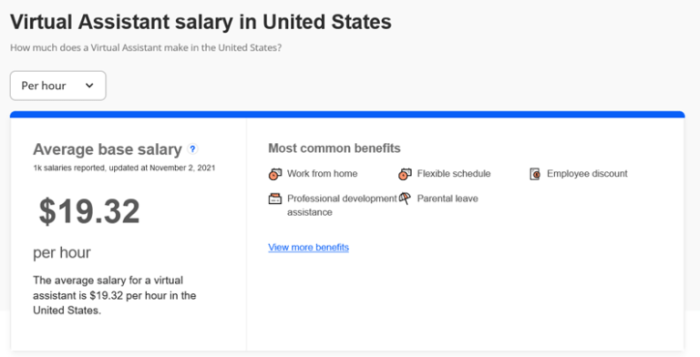
Accurately determining a virtual assistant’s salary requires diligent research across various platforms. Understanding salary ranges is crucial for both virtual assistants seeking fair compensation and clients budgeting for their VA needs. Several resources offer valuable insights into this dynamic market.
Reliable salary data for virtual assistants isn’t always readily available in a single, comprehensive database. However, combining information from multiple sources provides a clearer picture. The following resources offer different perspectives on virtual assistant compensation.
Reputable Websites and Online Resources for Virtual Assistant Salary Data
Several websites and online resources offer insights into virtual assistant salary information, though the data may not be perfectly consistent due to the varied nature of the work and experience levels.
- Salary.com, Glassdoor, Payscale: These general salary websites often include data on virtual assistant roles, though the information might be aggregated with other administrative assistant positions. Filtering by “virtual assistant” and specifying location can refine results.
- Indeed, LinkedIn: Job postings on these platforms frequently list salary ranges or hourly rates. Analyzing multiple listings provides a better understanding of the market value in specific areas and for various skill sets.
- Industry-Specific Forums and Communities: Online forums and communities dedicated to virtual assistants (e.g., Facebook groups, Reddit subreddits) can offer valuable anecdotal information and discussions on compensation. While not scientifically rigorous, these sources provide real-world perspectives.
- Freelancing Platforms (Upwork, Fiverr): While not always transparent about exact earnings, these platforms allow you to see the rates charged by other virtual assistants. This gives a sense of competitive pricing for different types of tasks.
Tips for Effectively Negotiating Salary and Compensation as a Virtual Assistant
Negotiating salary effectively involves preparation and confidence. Understanding your worth and the market value of your skills is paramount. Presenting a strong case based on data and experience increases your chances of securing favorable compensation.
- Research Thoroughly: Before any negotiation, gather salary data from the resources mentioned above. This allows you to present a justified salary expectation.
- Highlight Your Skills and Experience: Emphasize your unique skills and experience that add value to the client’s business. Quantify your achievements whenever possible (e.g., “Increased client engagement by 20%”).
- Know Your Worth: Determine your hourly rate based on your skills, experience, and the market value. Don’t undervalue yourself.
- Present a Professional Proposal: A well-structured proposal outlining your services, rates, and payment terms demonstrates professionalism and competence.
- Be Prepared to Negotiate: Have a range in mind and be prepared to compromise. Be confident and assertive, but also respectful and professional.
The Importance of Continuous Professional Development in Maintaining Competitive Salary Levels
The virtual assistant field is constantly evolving. Staying updated with new technologies, software, and skills is crucial for maintaining a competitive salary and attracting higher-paying clients. Continuous learning demonstrates a commitment to excellence and keeps your skills relevant.
- Online Courses and Certifications: Platforms like Coursera, Udemy, and LinkedIn Learning offer numerous courses on relevant skills such as project management, social media marketing, and specific software applications.
- Industry Conferences and Webinars: Attending industry events allows you to network, learn about new trends, and stay ahead of the curve.
- Mentorship and Networking: Connecting with experienced virtual assistants can provide valuable insights and guidance on career development and salary negotiation.
- Self-Directed Learning: Actively seeking out new information and resources through blogs, podcasts, and industry publications demonstrates a proactive approach to professional growth.
The Virtual Assistant Profession
The virtual assistant (VA) profession has experienced significant growth in recent years, driven by the increasing demand for flexible and cost-effective administrative, technical, and creative support. VAs offer businesses and individuals a wide range of services, allowing them to focus on core competencies while outsourcing tasks that can be handled remotely. This flexibility benefits both the client and the VA, creating a mutually beneficial working relationship.
Common Tasks and Responsibilities of Virtual Assistants
Virtual assistants handle a diverse array of tasks, depending on the client’s needs and the VA’s specialization. A strong understanding of these responsibilities is crucial for both prospective VAs and those seeking to hire their services.
- Administrative tasks: Scheduling appointments, managing emails, making travel arrangements, preparing presentations, and handling correspondence.
- Technical tasks: Website maintenance, social media management, data entry, and basic graphic design.
- Creative tasks: Content writing, blog post creation, editing, and proofreading.
- Customer service: Responding to customer inquiries, managing social media interactions, and providing basic technical support.
- Research tasks: Conducting market research, compiling data, and preparing reports.
- Bookkeeping and accounting: Basic bookkeeping tasks such as invoice processing and expense tracking (often requiring specific certifications).
Skills and Qualifications Needed for Success as a Virtual Assistant
Becoming a successful virtual assistant requires a blend of hard and soft skills. Prospective VAs should cultivate these skills to enhance their marketability and job satisfaction.
- Proficiency in relevant software: Microsoft Office Suite (Word, Excel, PowerPoint), Google Workspace (Docs, Sheets, Slides), project management tools (Asana, Trello), and CRM software.
- Excellent communication skills: Written and verbal communication is paramount for effective client interaction and task completion.
- Strong organizational and time management skills: VAs often juggle multiple tasks and clients, requiring exceptional organizational abilities.
- Problem-solving and critical thinking skills: The ability to identify and solve problems independently is essential.
- Adaptability and flexibility: The ability to adjust to changing priorities and client needs is crucial in this dynamic field.
- Professionalism and reliability: Maintaining a professional demeanor and consistently meeting deadlines builds client trust and loyalty.
- Specific skills depending on niche: Depending on their chosen specialization, VAs may need additional skills such as graphic design, coding, or marketing expertise.
Advantages and Disadvantages of Working as a Virtual Assistant
The decision to become a virtual assistant involves weighing the benefits against potential drawbacks. Understanding these aspects is vital for making an informed career choice.
| Advantages | Disadvantages |
|---|---|
| Flexibility and autonomy: Set your own hours and work from anywhere with an internet connection. | Income variability: Income can fluctuate depending on client workload and project availability. |
| Work-life balance: Better control over your schedule, allowing for a better integration of personal and professional life. | Isolation and loneliness: Working independently can sometimes lead to feelings of isolation. |
| Variety of tasks and clients: Exposure to diverse industries and projects keeps the work engaging. | Marketing and self-promotion: You are responsible for finding and securing your own clients. |
| Potential for high earning: Experienced and skilled VAs can command competitive rates. | Unpredictable workload: Client demands can fluctuate, leading to periods of high and low activity. |
| Low startup costs: Minimal investment is required to start a virtual assistant business. | Requires self-discipline and motivation: Success requires self-motivation and the ability to manage your own time effectively. |
Navigating the virtual assistant salary landscape requires a strategic approach. By understanding the factors influencing compensation, exploring various payment models, and leveraging available resources, virtual assistants can effectively position themselves for success. Continuous professional development and skillful negotiation are key to maximizing earning potential and building a thriving career in this ever-evolving field. The information presented here provides a solid foundation for making informed decisions and achieving financial goals.
FAQ Guide
What is the average salary for a virtual assistant globally?
Global averages are difficult to pinpoint due to significant variations based on location, skills, and experience. However, ranges typically start from $15 to well over $100 per hour for highly specialized senior-level VAs.
How can I find reliable salary data for my specific skills and location?
Utilize job boards like Indeed, LinkedIn, and specialized freelance platforms. Also, consider researching industry-specific salary surveys and consulting with professional organizations for virtual assistants.
Are there any legal considerations regarding virtual assistant contracts and payment?
Yes, it’s crucial to have legally sound contracts outlining payment terms, responsibilities, and intellectual property rights. Seek legal counsel if needed to ensure compliance with local laws and regulations.
What are some effective negotiation tactics for virtual assistants?
Research industry standards, clearly articulate your value proposition, present a confident and professional demeanor, and be prepared to justify your rate requests with evidence of your skills and experience.


